Complete Guide to Waterproofing Buildings in Uganda
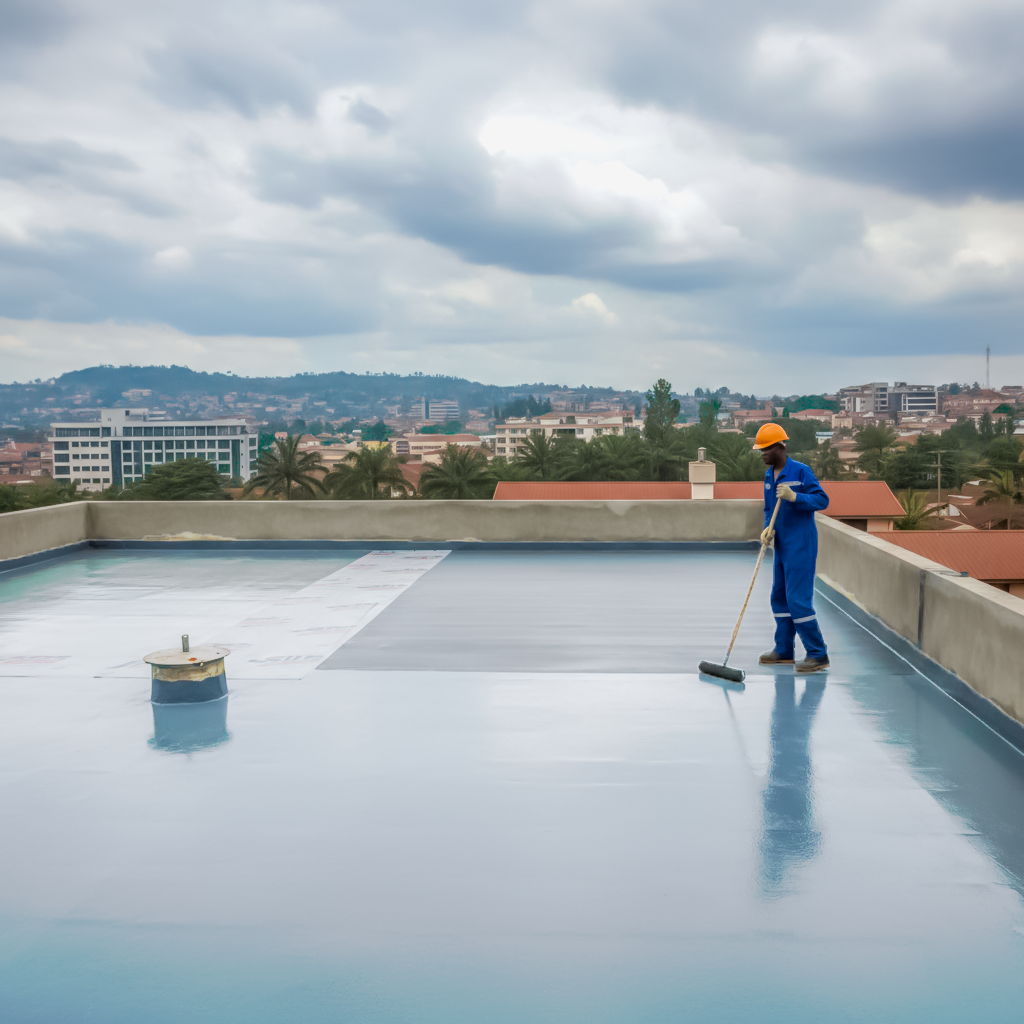
Water is one of the most persistent threats to building durability. While modern construction materials and techniques have significantly improved structural performance, water ingress continues to be a leading cause of deterioration in residential, commercial, industrial and infrastructure projects across Uganda. From leaking roof slabs and damp walls to failed basements and deteriorating concrete structures, the consequences of inadequate waterproofing can result in costly repairs, operational disruptions and reduced asset lifespan.
As Uganda continues to experience rapid urban development, particularly in growing commercial centres such as Kampala, Entebbe, Mbarara, Jinja, and Gulu, project stakeholders are increasingly recognising the importance of incorporating effective waterproofing strategies from the earliest stages of design and construction. Waterproofing is no longer viewed as a finishing activity but as an essential component of long-term building performance and structural protection.
This guide explores the causes of water ingress, areas of buildings that require protection, major waterproofing systems used in construction projects, common causes of failure, and best practices for achieving durable waterproofing performance in Uganda's construction environment.
Why Waterproofing Matters in Uganda's Construction Environment
Rainfall and Moisture Exposure
Uganda's tropical climate is characterised by significant seasonal rainfall, particularly in regions surrounding Lake Victoria and major urban centres. During rainy seasons, buildings are exposed to sustained moisture, surface water accumulation and increased pressure on drainage systems.
Poorly protected structures may experience:
- Roof leakage
- Damp internal walls
- Water penetration through foundations
- Concrete deterioration
- Finishing failures
- Mould and mildew growth
Even minor waterproofing deficiencies can become major maintenance challenges when subjected to repeated wetting cycles over several years.
Groundwater Challenges
Many construction sites encounter groundwater-related challenges, particularly for below-ground structures such as basements, lift pits, retaining walls, and underground service areas. Groundwater exerts pressure against structural elements, creating conditions where water seeks pathways through construction joints, cracks, honeycombed concrete, and poorly detailed interfaces. Without appropriate waterproofing measures, these structures become vulnerable to persistent leakage and long-term deterioration.
Long-Term Building Durability
Water intrusion affects more than aesthetics. Prolonged exposure to moisture can lead to corrosion of reinforcement steel, reduction in concrete durability, surface spalling, efflorescence, coating failures, and extensive damage to finishes and equipment. For developers and asset owners, addressing waterproofing issues after occupancy is often significantly more expensive than implementing appropriate waterproofing systems during construction.
Understanding How Water Enters Buildings
Effective waterproofing begins with understanding the mechanisms through which water enters structures.
Capillary Action
Concrete, mortar and masonry contain microscopic pores that can absorb and transport water. Through capillary action, moisture can travel considerable distances within porous construction materials. This phenomenon is commonly associated with rising damp in masonry walls, damp floor finishes, moisture staining, and salt deposits on walls. Rising damp remains one of the most frequently encountered issues in existing buildings throughout Uganda.
Hydrostatic Pressure
Hydrostatic pressure occurs when water accumulates against a structure and exerts force on its surfaces. Common examples include retaining walls, basement walls, water tanks, underground chambers, and lift pits. As water pressure increases, even small defects can become pathways for water ingress. Waterproofing systems intended for below-grade applications must therefore be capable of resisting sustained hydrostatic pressure.
Construction Joints
Construction joints are unavoidable in concrete structures. However, they often represent one of the most vulnerable locations for water penetration. Water can migrate through inadequately protected joints, particularly where waterbars are omitted, joint detailing is poor, or concrete placement quality is inconsistent.
Cracks in Concrete and Masonry
Cracking may occur due to shrinkage, thermal movement, settlement, structural loading, or poor curing practices. Even hairline cracks can provide pathways for moisture ingress, especially when exposed to repeated rainfall or groundwater pressure.
Defective Roof and Facade Details
Poor detailing around roof penetrations, drain outlets, expansion joints, window interfaces, and parapet walls can allow water to bypass waterproofing systems and enter the building envelope. Many roof leakage issues originate not from waterproofing material failure but from inadequate detailing and workmanship.
Building Areas That Require Waterproofing
- Foundations and Footings: Foundations remain in constant contact with soil moisture and groundwater. Waterproofing protects concrete durability and reduces corrosion risks.
- Retaining Walls: Exposed to soil moisture and hydrostatic pressure. Effective protection combines waterproofing, drainage measures, and proper backfill.
- Basements and Underground Structures: Present highly demanding waterproofing conditions. Strategies include waterproof membranes, waterstops, and drainage layers.
- Roof Slabs and Flat Roofs: Prone to ponding water, UV exposure, and thermal movement. Membrane-based systems are specified due to their durability and flexibility.
- Wet Areas: Bathrooms and kitchens are continuously exposed to moisture. Waterproofing should always be incorporated beneath the tile finishes.
- Water Tanks and Reservoirs: Require systems capable of resisting positive and negative pressure.
- Balconies and Podium Decks: Slabs experience direct weather exposure and thermal movement, requiring high-quality flexible barriers.
Common Waterproofing Failures in Construction Projects
Waterproofing failures are often highly damaging. Common causes include poor system selection, lack of robust surface preparation (substrate must be free of dust, oils, or loose fragments), improper installation (incorrect mixing, bad membrane laps), poor drainage, and weak detailing around pipe/conduit penetrations.
Major Waterproofing Systems Used in Uganda
- Cementitious Waterproofing: High quality, cost-effective, and highly compatible with concrete. For premium flexible performance, systems like SikaTop® 599 Seal, SikaTop® 501 Seal, and SikaTop® Seal 107 KE are widely specified for wet rooms, water retaining tanks, and foundation walls.
- APP and SBS Membrane Systems: Excellent durability for roof slabs and basements. Torch-applied APP membrane systems like SikaShield® P24 PE 4mm Rough and SikaShield® APP Membrane show unmatched resilience against ponding water and solar radiation.
- Integral & Crystalline Systems: Incorporated directly into concrete matrices to block capillaries, such as Sikalite® integral waterproofing admixture.
- Joint Sealing & Swelling Waterstops: Solving vulnerabilities across construction and expansion joints using products such as Sika Waterbar® O20 and SikaSwell® S-2 hydrophilic swelling sealant.
How to Select the Right Waterproofing System
System selection should evaluate the structure type, water exposure conditions (such as occasional rain vs. hydrostatic pressure), accessibility for future repairs, expected service life, and project lifecycle budget.
Best Practices for Long-Term Waterproofing Performance
Integrating waterproofing during early architectural design stages, prioritizing clean substrate preparation, pairing membranes with robust active drainage, and adhering strictly to manufacturer mixing and curing standards are key to securing long-term protection.
HOMNA Uganda Technical Perspective
Based on experience supporting commercial, industrial, and infrastructure projects across East Africa, waterproofing failures are heavily linked to detail execution, drainage deficits, and poor site application quality. A holistic system-based approach integrating structural, chemical, and physical barriers is primary.
Recommended Solutions
- SikaShield® P24 PE 4mm APP Membrane for robust roof slab, podium deck, and foundation envelope protection.
- Sika Waterbar® O20 and SikaSwell® S-2 Hydrophilic Sealant for sealing joints in below-grade concrete structures.
- SikaTop® 599 Seal and SikaTop® 501 Seal for premium flexible elastomeric cementitious slurry.
- SikaTop® Seal 107 KE for versatile flexible concrete rendering.
- Sikalite® Waterproofing Compound as an integral powder water repellent for standard floor toppings and plaster mixes.
Frequently Asked Questions
Why is waterproofing important for buildings in Uganda?
Uganda's robust seasonal rainfall patterns, shallow groundwater tables, and high humidity levels raise exposure risk. Effective waterproofing prevents structural degradation and maintains building lifespans.
What causes water ingress in concrete structures?
Common factors include shrinkage cracking, highly porous aggregate layers, dynamic movement joints, and failed membrane layers.
Which waterproofing system is best for foundations?
The best solution depends on groundwater levels. Typically, a combination of liquid cold-applied systems, APP torch-applied high durability membranes, and active PVC waterbars are preferred.
Can existing buildings be waterproofed?
Yes, remedial negative-side waterproofing with crystalline slurry or active polyurethane injections can resolve leaks from within the structure.
What is the difference between positive-side & negative-side waterproofing?
Positive-side is applied onto the face in direct contact with water (e.g., exterior base or reservoir interior). Negative-side is applied on the dry face behind concrete, stopping seepage after penetration.
How long should a waterproofing system last?
With proper professional installation and active drainage, modern APP and polyurethane systems can easily last 15 to 25+ years without failure.
Is drainage necessary alongside waterproofing?
Yes. Water management is a unified architecture. Grading, weep holes, and french drains relieve hydrostatic pressure and significantly improve the durability of any waterproof coating.
How can contractors improve waterproofing performance on site?
Clean all substrates to a sound surface, observe manufacturer-prescribed wet-film-thickness (WFT), reinforce boundaries with glass-fiber meshes, and provide complete curing/protection before backfilling.
Conclusion
Waterproofing is one of the most important investments in the long-term durability and performance of any building or infrastructure asset. Whether protecting foundations, retaining walls, roof slabs, water tanks or wet areas, successful waterproofing depends on understanding water ingress mechanisms, selecting suitable systems and ensuring quality installation practices.
For construction projects in Uganda, the most effective waterproofing strategies combine sound engineering principles, proper detailing, integrated drainage measures and proven waterproofing technologies. By addressing waterproofing requirements early in the design and construction process, project stakeholders can significantly reduce maintenance costs, improve asset longevity and enhance building performance.
Need guidance on waterproofing system selection for your next project?
Speak with the HOMNA Uganda Technical Solutions Team for specification guidance, technical support and project-specific waterproofing recommendations.
Solutions: https://uganda.homnaltd.com/solutions?partner=sika
Need Expert Engineering & Specification Support?
Our technical engineering desk assists architects, structural engineers, and contractors across Uganda with specification, quantity takeoffs, and certified installation.
Contact HOMNA Technical Desk