What to Specify on a Hotel or Resort Project: A System-by-System Guide for Engineers and Architects
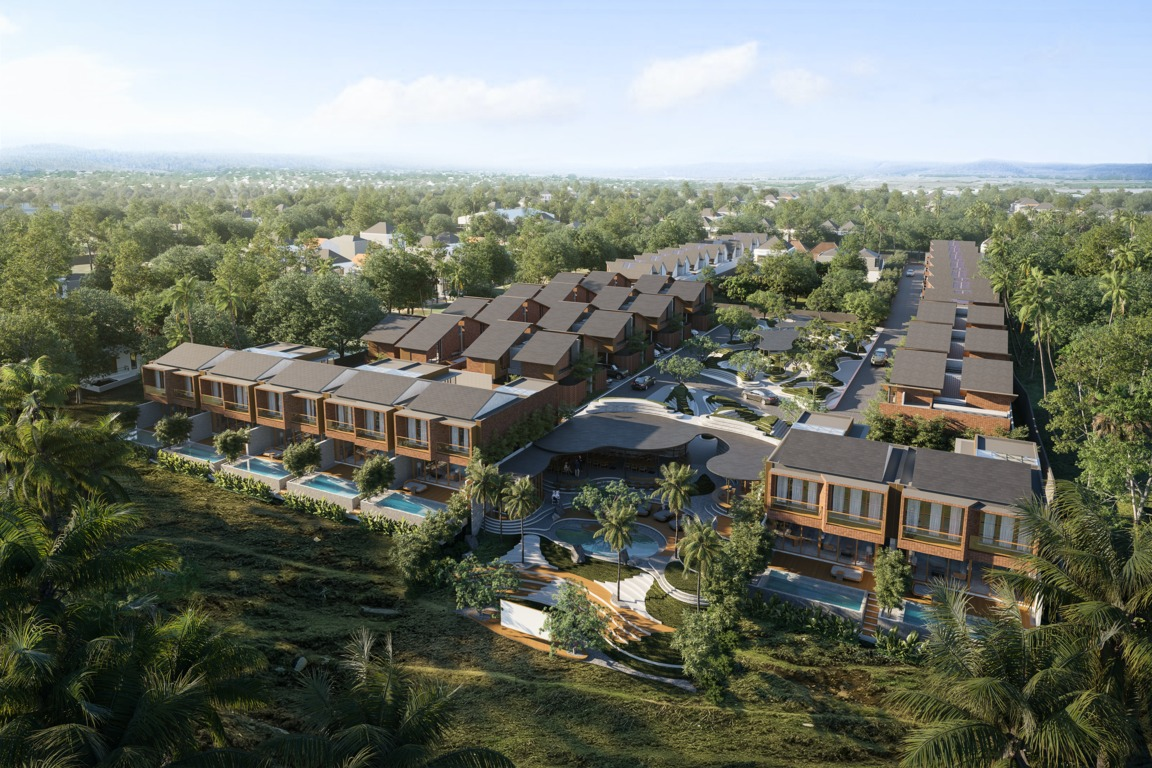
A hotel is one of the most technically demanding building types an engineer or architect will work on. It combines the structural complexity of a high-rise with the hygiene requirements of a healthcare facility, the drainage demands of an industrial building, and the finish expectations of a luxury residential project, all in one structure that needs to perform continuously, around the clock, for decades.
Every specification decision on a hospitality project carries weight. A waterproofing failure beneath a swimming pool affects guest experience and structural integrity simultaneously. An undersized drainage system in a hotel kitchen creates regulatory and operational problems. An underspecified floor coating in a back-of-house corridor deteriorates faster than the maintenance budget allows.
HOMNA has delivered construction systems across some of East Africa's most recognized hospitality projects, including Movenpick Kigali, Marriott Hotel Kampala, Hilton Hotel Kampala, and Zaria Court Hotel in Kigali. This guide draws on that experience to walk engineers and architects through the systems that belong on every hotel and resort project, and what to look for at each specification stage.
Concrete Technology: Getting the Structure Right from the Start
Hotel structures typically involve a combination of post-tensioned slabs, transfer beams, deep basements, and large-volume pours, all of which place specific demands on the concrete mix design.
What to specify and why
For high-rise hotel structures where early strength gain is critical to the construction programme, Sika VisoCrete 20 HE and Sika VisoCrete 90 HE are high-early-strength superplasticizers that allow formwork to be struck sooner without compromising the design strength of the element. On a hotel project where floor cycles drive the entire programme, this is a meaningful efficiency gain.
For transfer slabs and large monolithic pours where thermal cracking is a risk, Sika Fiber, polypropylene or steel fibre reinforcement added to the mix, reduces plastic shrinkage cracking and improves the toughness of the hardened concrete. This is particularly relevant on podium slabs and pool decks where crack control has direct waterproofing implications.
Sika Antisol curing compounds, applied immediately after finishing, retain surface moisture during the critical early hydration period, preventing the surface cracking that compromises both aesthetics and durability on exposed hotel floor slabs and terraces. [Read more about concrete admixtures]
Waterproofing: The Most Critical System on Any Hotel Project
Water ingress is the single most common cause of structural damage and guest experience failure in hotels. Bathrooms, kitchens, swimming pools, basements, rooftop terraces, and balconies all represent potential water ingress points, and each one demands a waterproofing system matched to its specific exposure condition.
Basements and below-grade car parks
Hotel basements in Kigali and Kampala face groundwater pressure, especially during the rainy seasons. The specification for below-grade structures should combine a waterproofing admixture in the concrete mix, Sikalite for crystalline barrier formation within the matrix, with a surface-applied cementitious coating like SikaTop Seal 107 on internal faces, and Sika Swell S-2 hydrophilic waterstop profiles at all construction joints.
This three-layer approach addresses the three main water ingress pathways in a basement: through the concrete body, through the surface, and through the joints.
Swimming pools and water features
Hotel pools are among the most technically demanding waterproofing applications. They combine constant hydrostatic pressure, thermal cycling, chemical exposure from pool treatment products, and the aesthetic expectation of a flawless finish.
The correct specification for a cast-in-place concrete pool is SikaTop 107 Seal applied as a two-component flexible cementitious coating on all internal faces, with Sika Waterbar PVC waterstops cast into all construction and movement joints. Where crack bridging performance is required over existing concrete, SikaTop 501 Seal provides the flexibility needed to accommodate minor structural movement without compromising the waterproof membrane.
Bathrooms and wet areas
Every guest bathroom is a wet area that will experience daily water exposure for the life of the building. The specification here is a SikaTop 105 Seal or SikaTop Seal 107 cementitious waterproofing membrane applied beneath the tile adhesive bed, covering the floor, the full height of the shower enclosure walls, and the floor-to-wall junction where most failures originate.
Tile adhesives from the Sika Ceram range, Sika Ceram 80, Sika Ceram 105, and Sika Ceram 205, complete the wet area specification, providing the bond between the waterproofing membrane and the finish tile in conditions of permanent moisture and thermal movement.
Rooftop terraces and pool decks
Exposed rooftop areas on hotel buildings face a combination of UV radiation, thermal movement, foot traffic, and rainfall. The SikaShield APP Membrane provides robust waterproofing for these areas, with the flexibility to accommodate thermal movement and the durability to resist the UV intensity of the East African climate.
Where a green roof or landscaped terrace is part of the architectural design, as seen on several Kigali hospitality projects, the complete Sika Green Roof System integrates waterproofing, drainage, filtration, and protection layers into a single engineered assembly. [Read more about waterproofing systems]
Flooring Systems: Specifying for Every Zone in the Hotel
A hotel contains more distinct floor use zones than almost any other building type. Each one, from the grand lobby to the industrial kitchen, from the spa wet room to the rooftop bar, carries different performance requirements, and a single flooring specification does not cover all of them.
Public areas, lobbies, and corridors
In high-footfall public areas, the floor finish needs to combine aesthetic quality with long-term wear resistance. SikaFloor 264, a self-smoothing epoxy system, delivers a seamless, high-quality surface that is easy to clean and maintain, with sufficient hardness for continuous pedestrian traffic. For areas where a decorative aggregate finish is part of the design intent, Sika QuartzTop 3 provides a coloured quartz broadcast system that adds both texture and durability.
Commercial kitchens and food preparation areas
Hotel kitchens operate under conditions that destroy standard floor coatings, thermal shock from steam cleaning, chemical aggression from cleaning agents, heavy point loads from equipment, and constant wet conditions. The specification for hotel kitchen floors is Sika Ucrete, a polyurethane concrete system with exceptional resistance to thermal shock, chemical attack, and heavy mechanical loads. It is the system specified in commercial kitchen environments across HOMNA's food and beverage project portfolio, and it belongs on every hotel kitchen floor.
Back-of-house, laundry, and service areas
Service corridors, laundry rooms, and plant areas benefit from a high-build epoxy system like SikaFloor®-161, a solvent-free coating with good chemical resistance and a durable, easy-to-clean surface appropriate for moderate traffic and occasional wet conditions.
Spa and wellness areas
Spa facilities combine wet area demands with the expectation of a premium finish. SikaFloor®-264 and Sikadur® 508 / 507 Quartz Sand epoxy systems provide seamless, waterproof floor surfaces in spa wet rooms and treatment areas, hygienic, slip-resistant, and compatible with the tile or resin finishes typically specified in wellness environments.
Drainage: Designing for the Full Scope of Hotel Water Management
A hotel generates significant volumes of wastewater across multiple sources, guest bathrooms, commercial kitchens, laundry facilities, swimming pools, and surface water from terraces and car parks. The drainage specification needs to address all of them.
Surface and terrace drainage
On pool decks, terraces, and entrance plazas, ACO Drain Monoblock RD and ACO Stainless Steel Drainage Channels provide surface water collection with the load capacity and finish quality appropriate for hospitality environments. Stainless steel gratings are the specification standard for areas where aesthetics are visible to guests.
Bathroom and shower drainage
In guest bathrooms, the ACO Showerdrain M+ delivers a linear drain solution that combines reliable drainage performance with a clean, contemporary aesthetic, appropriate for the finish quality expected in hotel guest rooms and suites. For bathroom floor drainage points, the ACO Easyflow Bathroom Gully provides a compact, hygienic, and easily maintainable solution.
Kitchen grease management
Every hotel with a commercial kitchen requires a grease separation system as part of the drainage specification. ACO Grease and Starch Separators intercept fats, oils, and food solids before they enter the drainage network, preventing blockages, eliminating odours, and maintaining compliance with local environmental discharge standards. This is a non-negotiable specification on any hospitality project that includes food preparation.
Car park drainage
Hotel car parks and drop-off areas require drainage systems rated for vehicle loads combined with fuel and oil spill management. ACO Car Park Gullies address surface runoff with appropriate load classifications and compatibility with ACO Oil Separators & Petrol Interceptors where environmental discharge requirements apply.
Protective Coatings: Specifying for Appearance and Longevity
The coatings and surface protection specification on a hotel project carries both aesthetic and protective weight. In a hospitality environment, surfaces are judged by guests daily, and the cost of repainting or refinishing a hotel facade or interior ahead of schedule is a significant operational liability.
Exterior facades and structural protection
For hotel exteriors in Uganda, protective coatings must provide crack-bridging capability, anti-carbonation barrier protection, and the UV and weather durability required by East Africa's climate. SikaGard®-701 W hydrophobic impregnation and protective facade coatings provide long-term weatherproofing while maintaining vapor permeability.
Steel and structural metalwork
Exposed structural steel, staircases, balustrades, and external metalwork on hotel buildings require a proper corrosion protection system. High-performance anti-corrosion primers and epoxy topcoats deliver protection engineered for heavy exposure.
Insulation: Specifying for Guest Comfort and Operational Efficiency
In a hotel, insulation is a direct contributor to two things that matter to every operator, guest comfort and energy costs. A poorly insulated hotel room is too hot, too noisy, and too expensive to cool. A well-specified building envelope pays back the specification investment through the life of the asset.
Roof insulation
Hotel roofs, particularly on low-rise resort structures and on the plant level of high-rise hotels, absorb significant radiant heat. Jumbo Chem Roof Insulation reflects up to 97% of incoming radiant heat, reducing the thermal load transferred into the building and cutting the energy demand on the HVAC system. In Uganda's climate, this is one of the highest-return insulation specifications available.
Wall insulation
Jumbo Chem Wall Insulation restricts heat transfer through external and internal walls while providing acoustic separation between guest rooms, between rooms and corridors, and between different use zones within the hotel. Acoustic privacy is a fundamental guest expectation in any hotel, and it is far more cost-effective to specify correctly at construction stage than to remediate acoustically after handover.
Pipe insulation
Chilled water lines, hot water supply pipework, and HVAC distribution systems in a hotel are often long runs between plant and point of use. Jumbo Chem Pipe Insulation minimises heat gain or loss in transit, prevents condensation on cold pipework, and protects against corrosion, extending the service life of the mechanical systems and keeping energy performance at design intent.
Expansion joint filler
Hotels are large structures with multiple movement joints in floors, facades, and roofs. Jumbo Chem Expansion Joint Filler accommodates structural movement while maintaining the waterproof integrity of the building envelope, chemical-resistant, fully waterproof, and compatible with cold-applied sealant systems.
Sealing and Bonding: The Detail That Holds Everything Together
On a hotel project, the quality of sealing and bonding at joints, interfaces, and connections is what separates a watertight building envelope from one that leaks. These are the details that get missed when the specification stops at the major systems.
Sikaflex® Construction+ is the specification standard for facade joints, providing a durable, weather-resistant elastic sealant that accommodates movement at curtain wall interfaces, window perimeters, and cladding joints. For internal wet area joints and sanitary applications, Sikaflex®-11 FC+ delivers a flexible, mould-resistant seal appropriate for guest bathrooms and kitchen environments.
Where structural elements need to be bonded, new concrete to existing, precast units to in-situ structure, or repair sections to parent concrete, Sikadur®-32 Normal epoxy bonding agent provides a high-strength, reliable interface that performs under the load conditions of a hotel structure.
Specify Once. Perform for Decades.
A hotel is a long-term asset. The construction systems specified during the design stage determine how that asset performs, how much it costs to maintain, and how long it takes before major remediation is required. Specifying the right system in the right location, and having it installed by a certified applicator, is the decision that separates a building that performs from one that requires constant attention.
HOMNA has delivered waterproofing, flooring, drainage, coatings, insulation, and sealing systems across leading hospitality projects in Uganda and East Africa, including Movenpick Kigali, Marriott Hotel Kampala, Hilton Hotel Kampala, and Zaria Court Hotel. The team is available to provide technical guidance at specification stage, from product selection through to application methodology.
Contact:
Plot 95A 6th Street, Industrial Area, Kampala
Phone: +256 771 681 005 / +256 771 680 740
Email: info@homnaltd.com
Website: www.homnaltd.com
Need Expert Engineering & Specification Support?
Our technical engineering desk assists architects, structural engineers, and contractors across Uganda with specification, quantity takeoffs, and certified installation.
Contact HOMNA Technical Desk